At this point, we should say something about the Amorites, who will figure prominently, in one way or another, through much of the next part of our story. They are probably best known today as one of the peoples of the Old Testament, where they are listed in the Table of Nations amongst the tribal groups, occupying parts of Canaan, whom God ordered the Israelites to destroy:
‘However, in the cities of the Nations the Lord your God is giving you as an inheritance, do not leave anything alive that breathes. Completely destroy them—the Hittites, Amorites, Canaanites, Perizzites, Hivites, and Jebusites—as the Lord your God has commanded you’ (Deut. 20:16–17).
Speakers of a northwest Semitic language , the Amorites consisted originally of a number of nomadic groups who inhabited parts of Syria and Palestine. By the 24th century, some of them had moved to Ebla and settled there, as we know from Amorite names in the city’s archives. No doubt the secure, prosperous, and culturally sophisticated environment which Ebla offered, as did places further south like Qatna and Hamath which probably also had Amorite populations at this time, were inducement enough for the traditional pastoralists to exchange their nomadic lifestyle for a more settled urban one.
But as their tribal cousins were settling into the comforts and security of a Syro-Palestinian urban existence, other Amorite groups who maintained their traditional lifestyle began spreading eastwards into southern Mesopotamia. Perhaps drought conditions forced them to seek new pasturelands for their flocks and herds across the Euphrates.
As their numbers east of the river grew, so did the threat they posed to the kingdoms and city-states of their new homeland. Amorites now show up in Sumerian texts, under the name MAR.TU, meaning ‘west’ (that is to say, they came from the west), and the references to them are distinctly hostile.
A Sumerian literary composition speaks of them as boorish, rootless, uncultured savages:
‘The MAR.TU who know no grain . . . no house nor town, the boors of the mountains. The MAR.TU who digs up truffl es . . . who does not bend his knees (to cultivate the land), who eats raw meat, who has no house during his lifetime, who is not buried after his death . . . ’.
What the relationship is between the Amorites referred to here and those attested in the Eblaite texts of the same period is unclear. In any case, the Akkadian kings Sargon and Naram-Sin became involved in conflicts with the intruders.
Naram-Sin finally defeated them when he quashed the ‘Great Revolt’, a widespread uprising of his subject cities, at a place called ‘the mountain of (the land) Martu’ (Basar, modern Jebel Bishri). But the amorite menace persisted.
After the fall of the Akkadian empire, Amorite groups consistently pressed upon territories claimed by the new overlords of Babylonia, the kings of the Ur III dynasty. In an attempt to keep their lands free of the Amorites, the kings built a chain of fortifications or watchtowers across northern Babylonia. Their efforts failed. But the Ur III empire was soon to end anyway.
Around 2004, it was destroyed—not, as it happened, by the Amorites but by invaders from south-western Iran called the Elamites. The situation was ripe for exploitation. Amorite chieftains moved quickly to fill the power vacuum in the region left by the Elamite victory, setting themselves up as rulers of a number of Babylonian cities formerly subject to the Akkadian and Ur III kings, including Larsa, Babylon, Kish, Marad, and Sippar.
Discarding their ancestral nomadic origins, the Amorites had by now completely assimilated to urban society.
‘However, in the cities of the Nations the Lord your God is giving you as an inheritance, do not leave anything alive that breathes. Completely destroy them—the Hittites, Amorites, Canaanites, Perizzites, Hivites, and Jebusites—as the Lord your God has commanded you’ (Deut. 20:16–17).
Speakers of a northwest Semitic language , the Amorites consisted originally of a number of nomadic groups who inhabited parts of Syria and Palestine. By the 24th century, some of them had moved to Ebla and settled there, as we know from Amorite names in the city’s archives. No doubt the secure, prosperous, and culturally sophisticated environment which Ebla offered, as did places further south like Qatna and Hamath which probably also had Amorite populations at this time, were inducement enough for the traditional pastoralists to exchange their nomadic lifestyle for a more settled urban one.

Cuneiform clay tablets of Ebla mention Amorite names in the city’s archives.
But as their tribal cousins were settling into the comforts and security of a Syro-Palestinian urban existence, other Amorite groups who maintained their traditional lifestyle began spreading eastwards into southern Mesopotamia. Perhaps drought conditions forced them to seek new pasturelands for their flocks and herds across the Euphrates.
As their numbers east of the river grew, so did the threat they posed to the kingdoms and city-states of their new homeland. Amorites now show up in Sumerian texts, under the name MAR.TU, meaning ‘west’ (that is to say, they came from the west), and the references to them are distinctly hostile.
A Sumerian literary composition speaks of them as boorish, rootless, uncultured savages:
‘The MAR.TU who know no grain . . . no house nor town, the boors of the mountains. The MAR.TU who digs up truffl es . . . who does not bend his knees (to cultivate the land), who eats raw meat, who has no house during his lifetime, who is not buried after his death . . . ’.
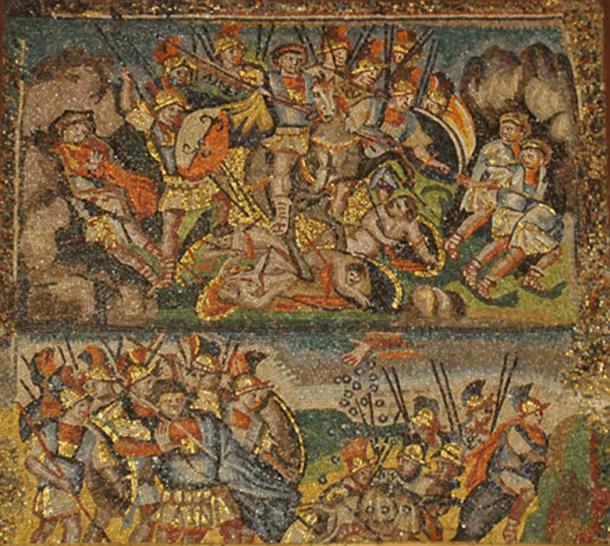
Amorites show up in Sumerian texts, they came from the west and the references towards them are hostile.
What the relationship is between the Amorites referred to here and those attested in the Eblaite texts of the same period is unclear. In any case, the Akkadian kings Sargon and Naram-Sin became involved in conflicts with the intruders.
Naram-Sin finally defeated them when he quashed the ‘Great Revolt’, a widespread uprising of his subject cities, at a place called ‘the mountain of (the land) Martu’ (Basar, modern Jebel Bishri). But the amorite menace persisted.
After the fall of the Akkadian empire, Amorite groups consistently pressed upon territories claimed by the new overlords of Babylonia, the kings of the Ur III dynasty. In an attempt to keep their lands free of the Amorites, the kings built a chain of fortifications or watchtowers across northern Babylonia. Their efforts failed. But the Ur III empire was soon to end anyway.
Around 2004, it was destroyed—not, as it happened, by the Amorites but by invaders from south-western Iran called the Elamites. The situation was ripe for exploitation. Amorite chieftains moved quickly to fill the power vacuum in the region left by the Elamite victory, setting themselves up as rulers of a number of Babylonian cities formerly subject to the Akkadian and Ur III kings, including Larsa, Babylon, Kish, Marad, and Sippar.
Discarding their ancestral nomadic origins, the Amorites had by now completely assimilated to urban society.
Comments
Post a Comment